


Trace the Information: Is this Sugar, the horse that doesn’t like to be ridden?
SKILL: Trace the Information
DIFFICULTY: Challenging
SUBJECT(S): General
Posted: October 12, 2022
Students will use a reverse image search to learn that this viral post does not in fact depict a relatable horse named Sugar that feigns sleep to fend off potential riders.
Link to Example
Meet Sugar, or maybe don’t (X/Twitter)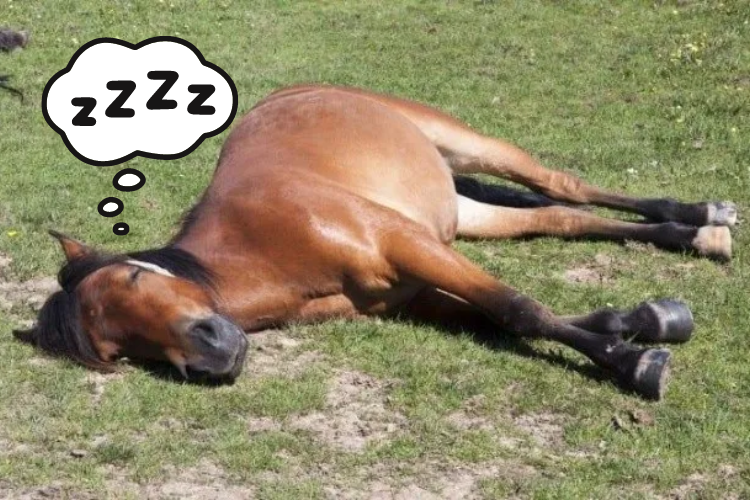
About the Example
Teacher note: If you cannot access X/Twitter, click here for a screenshot of the post that you can share with your students.
A recent post on X/Twitter introduces us to a horse named Sugar. Apparently she does not care much for being ridden, and so pretends to fall asleep when she sees someone approaching her with a saddle. The relatable story of Sugar the horse has been liked almost half a million times, and reposted and shared almost 50,000 times.
A successful lateral read will reveal that the picture itself is real — it’s a real horse that’s sleeping — but the story of Sugar is made up.
Because this is an image, it makes sense to start lateral reading with a reverse image search. However in this case, the technique doesn’t give us the information that we want. Because Sugar went viral, many outlets reported on the story, and it’s not immediately clear if it’s true or not.
Often when we are reading laterally, we have to try more than one skill to arrive at a definitive conclusion. In this case, a simple claim check turns out to give the most accurate answer. A keyword search on terms such as “sugar sleeping horse” brings up a Snopes article that rates the claim as miscaptioned, and explains the background.
This example shows the value of switching lateral reading strategies to arrive at a conclusion. And you get to see many sleeping horses along the way, so everyone wins.
Activities
- Show students the post and have them identify the claim.
- Using a reverse image search to find other places this image has appeared on the internet. The search results show the picture on various websites repeating the Sugar story, reporting on the virality of the image while neither confirming or refuting the claim.
- Ask students if they can locate definitive proof one way or the other about Sugar. If they can’t find this information, ask they what other check my might try.
- Suggest simple keyword / claim search if necessary, and review the results, which should include a detailed fact-check from Snopes, a reliable source.
Related Resources
- LESSON: Verification Skills Lesson 2: Investigate the Source
- VIDEO: Trace the Information (1:54 minutes)
- VIDEO: Skill: Search the History of an Image (8:32 minutes)