


Check the Claim: Is Canadian AI politeness wasting energy?
SKILL: Check the Claim
DIFFICULTY: Simple
SUBJECT(S): Climate change, AI
Posted: January 23, 2026
Students will use a keyword search to learn that being polite to chatbots does indeed increase their already considerable energy consumption.
Link to Example
KitKat Ad (Instagram)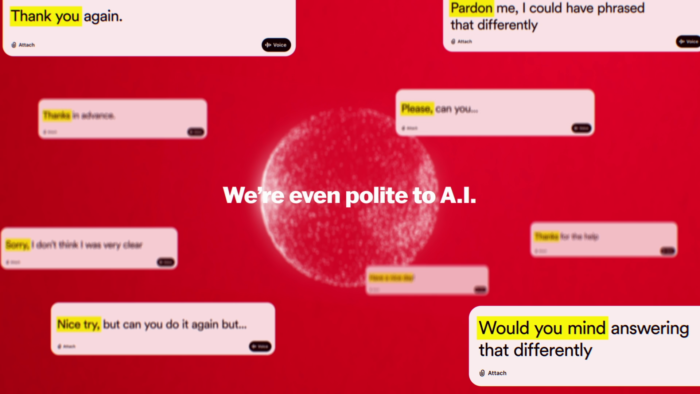
Background
Chatbots are computer programs that use artificial intelligence (AI) to process and respond to human language, simulating natural-sounding conversations in real time. A prompt is a message, question, or instruction that a user enters into a chatbot to receive a response.
Training and using AI tools like chatbots has a significant environmental impact, largely due to the energy and water required to power and cool data centres.
About the Example
Teacher Note: If you cannot access Instagram, click here to view the video uploaded to our YouTube channel that you can share with your students.
This post from KitKat Canada urges Canadians to “have a break from A.I. Politeness,” claiming that using extra words in chatbot prompts, such as “thank you,” “sorry,” and “pardon,” wastes energy.
Since KitKat’s primary motive for producing the ad is selling chocolate bars, not environmental education, let’s use a keyword search to check what credible sources are saying about this claim.
By searching using the keywords “AI politeness energy,” we find coverage from credible news and technology outlets like PC Mag, BBC Science Focus, Futurism, and CNN. These articles confirm that while this isn’t a uniquely Canadian behavior, thanking chatbots and adding polite words to prompts does add to the computing power required for chatbots to process and generate responses.
However, we also learn that it’s not clear how much extra energy it takes for chatbots to process prompts of different lengths, since AI companies are typically very secretive about how much energy their programs use. Knowing what we know about how chatbots work, though, we can still be confident that longer prompts will use some amount of extra energy.
By trading up to these higher-quality sources, we gain important context about the energy and water costs of AI use, even without polite prompts. If our goal is to be conscientious about our environmental impact, we might then also consider when we should take a break from using AI tools altogether and opt for less energy-intensive traditional search engines, instead.
Activities
- Show students the KitKat ad and ask them to identify the claim being made. Fill in any gaps in their knowledge about what chatbots and prompts are.
- Have students use a keyword search to see what credible sources are saying about this claim. Guiding questions:
- Is KitKat’s claim true, false, or somewhere in the middle? Explain your reasoning.
- What additional context did you learn about the environmental impact of AI use?
- Even when a claim turns out to be true, why is it important to trade up to a higher quality source of information before sharing or repeating it?
Related Resources
- LESSON: Verification Skills Lesson 3: Check the Claim
- VIDEO: Check the Claim (2:18 minutes)
- VIDEO: Skill: Check Other Sources (6:18 minutes)
For more lessons exploring AI, including the ethical issues around its use, see our AI Literacy module.